
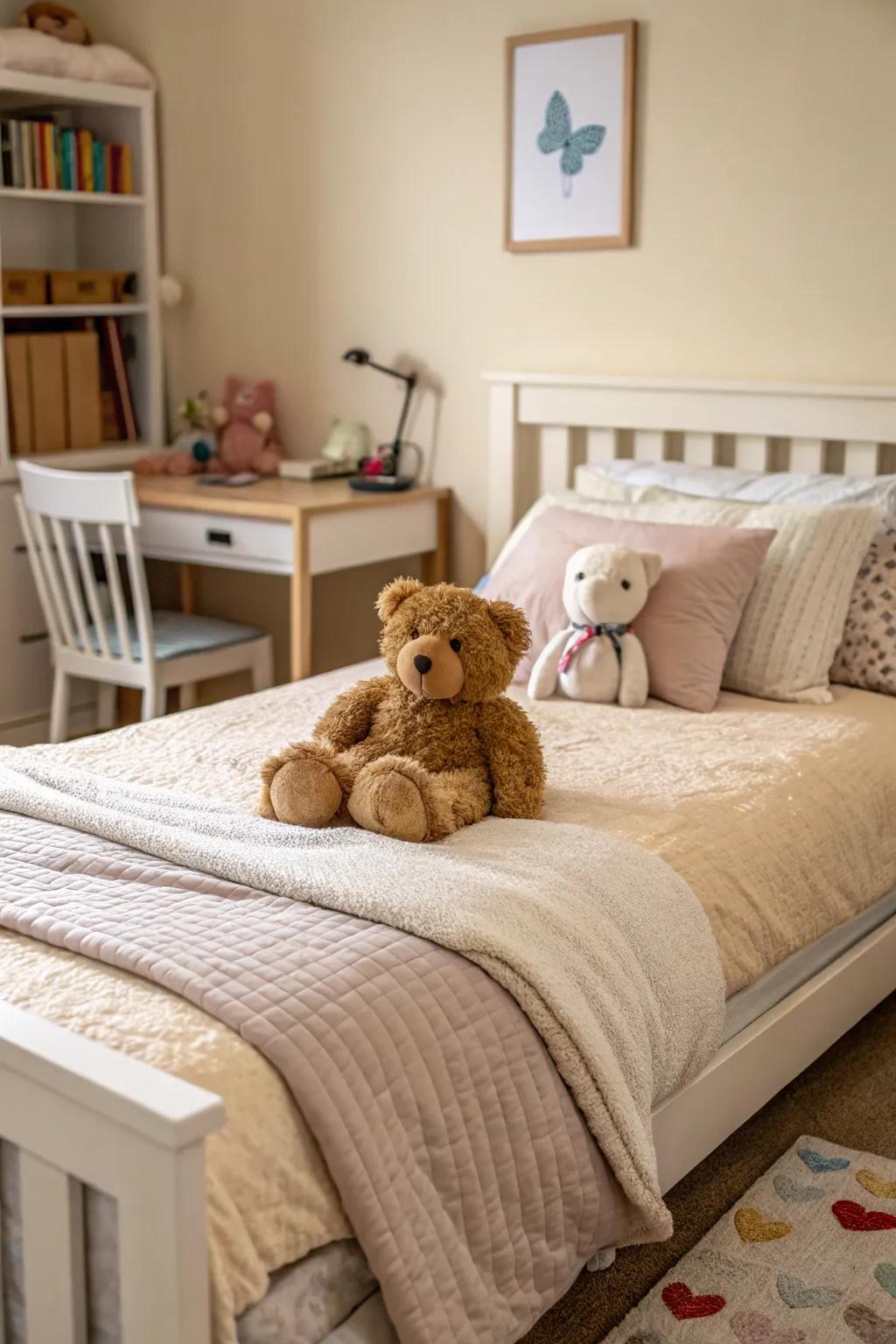
Creating a bedroom for a foster child is a unique design challenge that requires both practicality and warmth. Let’s explore some thoughtful ideas to make this space both comforting and functional.
1. Start with a Versatile Bed

Adopting a twin bed is a smart choice for a foster bedroom, as it accommodates most age ranges. If space permits, consider a bed that can be converted into a toddler bed. This approach allows flexibility, a core concept in many minimalist kids’ room ideas, much like how I plan my design moves with future possibilities in mind.
2. Anchor Storage Solutions

Ensure your foster child has their own space with sturdy, anchored storage solutions. Securely attached shelves and drawers offer both safety and personal space. In my projects, I always prioritize stability, much like a well-thought-out design plan.
3. Create a Cozy Reading Nook

Add a comfortable chair or beanbag in a cozy corner to create a safe retreat. Creating this kind of dedicated zone is an integral part of many nursery layout ideas. A few blankets nearby add warmth, inviting them to relax and unwind. I find that small, thoughtful details often make the biggest difference in creating a welcoming space.
4. Offer a Range of Diverse Books

Stock the room with diverse books that cater to various interests and backgrounds. Similar to other 10-year-old room ideas, this approach respects their developing personality. This not only provides entertainment but also fosters a sense of belonging. Just like in my designs, I believe in reflecting a wide spectrum of stories and experiences.
5. Keep Toys Gender-Neutral

Having a few gender-neutral toys on hand is a welcoming gesture. These toys can help break the ice and make the child feel at home. In design, I always aim for inclusivity and adaptability, which are key principles in minimalist kids’ room design, ensuring everyone feels welcome.
6. Embrace Neutral Decor

Opt for neutral decor to keep the space adaptable for any child’s personal taste. Grays and tans work well as they allow new additions without clashing. For inspiration using a neutral palette, explore some DIY farmhouse bedroom ideas. This approach is akin to a blank canvas, waiting to be personalized.
7. Add a Comforting Stuffed Animal

Include a new stuffed animal for the child to choose from upon arrival. This small gesture can provide comfort and a sense of ownership. When planning a nursery in a parent’s bedroom, these comforting details are especially important. I find that such personal touches often transform a space into a home.
8. Provide a Night Light

A night light offers reassurance in a new environment, allowing kids to control their immediate surroundings. It’s a simple yet effective way to provide a sense of security. In design, as in life, small, thoughtful details—from lighting to clever baby room storage—often make a big impact.
9. Choose Reusable Furniture

Invest in durable, neutral furniture that can withstand multiple uses over time. Wood is a great option; see these wood bedroom ideas for inspiration. This not only saves costs but also ensures the space remains welcoming for future placements. My approach to design always involves sustainable, long-term thinking.
10. Keep the Room Uncluttered

Maintain an uncluttered space to allow children to bring their own belongings. Of course, keeping things tidy is easier with smart storage for a toddler room. This encourages them to add personal touches and feel truly at home. It’s like leaving room on a chessboard for new and strategic moves.
11. Decorate Together

Leave some decorating decisions for when the child arrives, allowing them to personalize their space. This collaborative effort fosters a sense of belonging and ownership. I always find value in shared decisions, much like in a harmonious design process.
12. Stock Diverse Toys and Books

Ensure you have toys and books that reflect a range of cultures and experiences. This inclusion helps foster a broader understanding and acceptance. I believe every element in a space should contribute to a welcoming and inclusive environment.
13. Incorporate Personal Space Elements

Designate areas within the room where children can express themselves. Whether it’s a small desk for drawing or a wall for art, these spaces encourage creativity. I value these personal touches as they often become the heart of the room.
14. Include a Flexible Lighting Plan

Incorporate various lighting options to allow changes in mood and function. From task lighting to ambient lights, flexibility is key. As in design, lighting sets the tone and enhances the atmosphere of a space.
15. Plan for Future Adjustments

Always keep an eye on the future, allowing room for easy adjustments as needs change. Whether this means rearranging furniture or adding new elements, flexibility is vital. Like a game of chess, anticipate future moves to keep the space dynamic.