
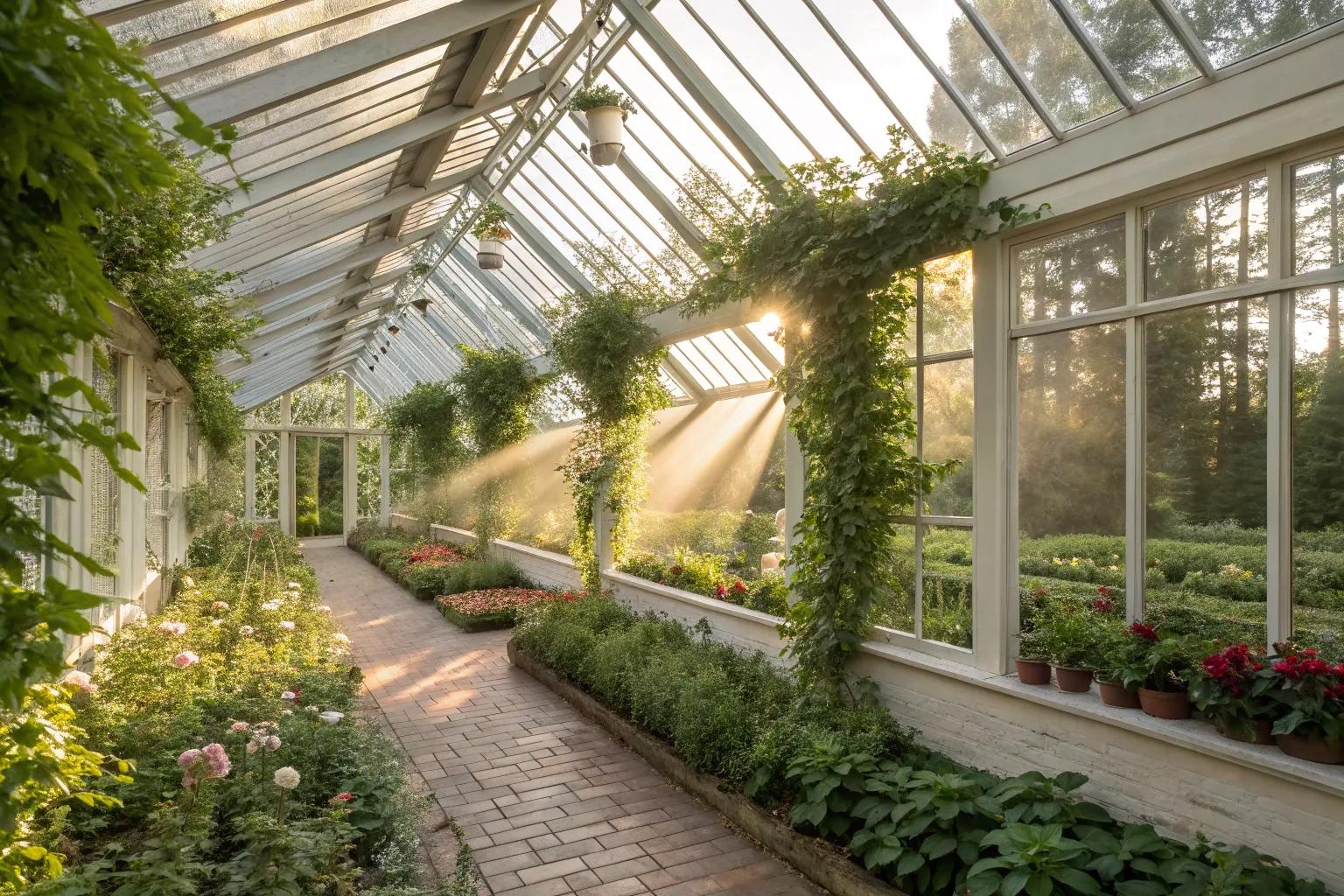
Ventilating your greenhouse is like giving it a breath of fresh air—it keeps everything lively and thriving. Let’s explore some creative ways to ensure your plants are as happy as they can be in their cozy glass home.
1. Install Roof Vents

Think of roof vents as your greenhouse’s skylights—they let the hot air rise and escape, keeping temperatures in check naturally. This is a key feature in many she-shed greenhouse designs. When I added roof vents to my setup, I noticed my plants seemed to breathe easier and grow faster. This method is perfect if you’re looking for a low-energy solution that works with nature.
2. Use Roll-Up Sidewalls

Roll-up sidewalls are like giving your greenhouse a nice, refreshing breeze on a warm day. Much like these enclosed front porch ideas that blend indoor and outdoor living, this option is a budget-friendly way to boost airflow without using electricity. Plus, it’s like giving your plants a gentle hug of fresh air whenever needed.
3. Create Cross-Ventilation

For a natural cross-ventilation setup, arrange vents on opposite sides of your greenhouse. This setup lets cool air enter from one side and warm air escape from the other, creating a gentle airflow through your plant haven. For more ways to create a relaxing outdoor space, explore these porch decorating ideas. When I implemented this, my greenhouse felt more balanced and my plants thrived with the constant fresh air.
4. Add Circulation Fans

Installing circulation fans can make a huge difference in maintaining even temperature and humidity levels. Similar to how you’d plan for airflow in these off-grid outdoor kitchen ideas, I’ve found that these fans, placed strategically, help keep the air moving and prevent any hot or cold spots from forming. They’re a great addition to ensure every plant gets its share of fresh air.
5. Use Exhaust Fans

For those extra hot days, exhaust fans are your greenhouse’s best friend. They pull out the warm, stagnant air, making room for cooler air to flow in. I’ve noticed that using exhaust fans helps maintain a comfortable environment even during peak summer heat, which is just as important as having good garden storage solutions for your tools.
6. Install Automatic Vent Openers

Automatic vent openers are a lifesaver, especially if you’re not around to manually adjust vents. These handy devices open vents based on temperature, ensuring your plants always have ideal conditions. Just as you might look for budget-friendly insulation ideas to manage heat in winter, these openers are a smart way to manage it in summer. I find them incredibly convenient as they take the guesswork out of ventilation.
7. Use Shade Cloth

While not strictly ventilation, a shade cloth can help manage heat by reducing sunlight exposure. I’ve used shade cloths to cool down my greenhouse, which complements ventilation efforts beautifully. It’s a simple addition that helps maintain a more stable environment.
8. Consider an Evaporative Cooler

For those hot, dry days, an evaporative cooler can be a blessing. It cools the air while adding moisture, which my plants absolutely love during peak summer months. If you’re bringing plants inside, you might also like these creative indoor planter ideas. It’s an efficient way to tackle both heat and dryness simultaneously.
9. Utilize Natural Wind Effect

Take advantage of the natural wind effect by aligning your greenhouse to catch breezes. Similar to how you’d position an outdoor grill gazebo to manage smoke and airflow, when I positioned my greenhouse to face prevailing winds, I noticed a significant improvement in airflow without needing extra equipment. It’s all about working with nature to your advantage.
10. Use Wall Vents

Adding wall vents can significantly boost airflow by allowing fresh air to enter at plant level. I’ve found that wall vents create a gentle cross-breeze, enhancing the overall ventilation system. This kind of thoughtful planning is also key for good outdoor storage solutions. They’re a must-have for keeping the lower areas of the greenhouse well-aerated.
11. Strategize Vent Placement

Strategic vent placement means positioning them to take advantage of natural airflow patterns. I’ve learned that placing vents on opposite sides enhances cross-ventilation, making my greenhouse much more efficient—a key consideration for combined spaces like the ones found in these she-shed greenhouse ideas. It’s all about maximizing natural airflow to ease the workload on mechanical systems.
12. Harness Solar Vent Openers

Solar vent openers are a sustainable way to automate your ventilation system. These nifty devices use solar power to open and close vents as needed, which I love for its eco-friendly approach, a principle also seen in many off-grid outdoor kitchen ideas. It’s a set-it-and-forget-it solution that keeps your greenhouse in sync with the sun.
13. Install a Ventilation System

A comprehensive ventilation system combines fans, vents, and sometimes cooling pads. I’ve seen firsthand how such systems maintain a stable environment, a principle that also applies to creating year-round comfort with closed-in front porch ideas. It’s an investment that pays off by ensuring a consistent, healthy climate for your plants.
14. Monitor Environmental Conditions

Using tools like thermometers and hygrometers helps you keep a pulse on your greenhouse environment. I’ve found that regularly checking these readings allows me to adjust my ventilation strategy as needed. It’s an easy way to stay proactive about your plants’ needs, especially when combined with the cheapest insulation ideas to manage temperature swings.
15. Adapt to Seasonal Changes

Adapting your ventilation strategy to the seasons is key. I adjust my system as the weather shifts to keep my plants thriving year-round, which often involves getting seasonal tools in and out of a well-organized space—explore these garden storage ideas for inspiration. Flexibility in your approach ensures your greenhouse remains a perfect sanctuary no matter the season.
16. Incorporate a Balance of Passive and Active Systems

Blending passive and active ventilation systems offers the best of both worlds. I’ve found this approach gives me control while saving on energy costs, a smart design principle that also enhances structures like these outdoor grill gazebo ideas. It’s about striking the right balance to keep your greenhouse efficient and your plants happy.