
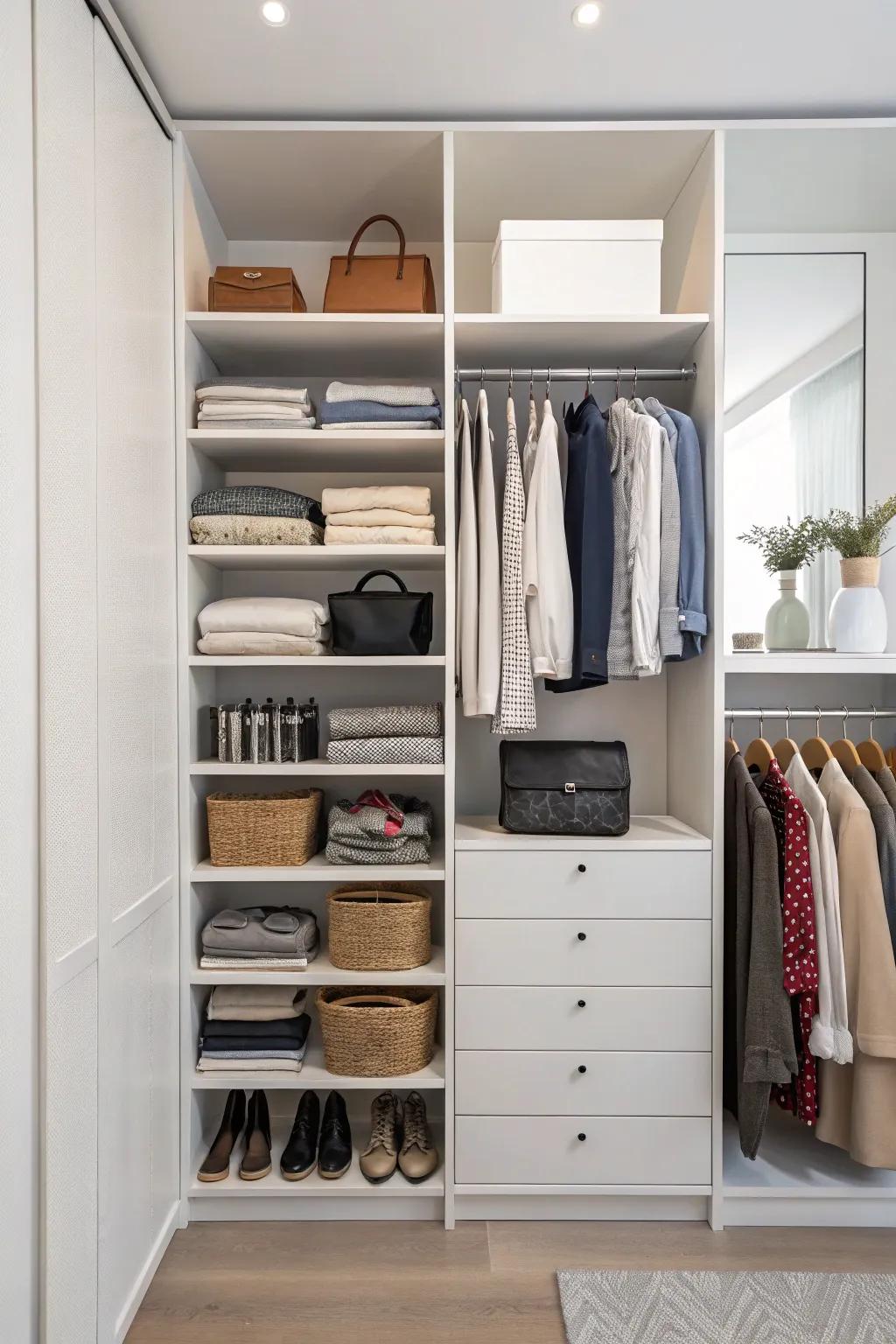
Creating a minimalist walk-in closet isn’t just about reducing clutter; it’s about designing a space that brings peace and efficiency into your daily routine. With the right strategies, you can transform even the smallest of spaces into a sanctuary of style and functionality.
1. Embrace Open Shelving

Open shelving is a fantastic way to maintain a minimalist aesthetic while keeping everything accessible. I love how it allows for easy visualization of my wardrobe, which makes outfit planning a breeze. Remember, less is more—so keep only your favorite pieces on display.
2. Utilize Vertical Space

Incorporating vertical storage solutions can significantly maximize your closet’s space. Tall shelves or dual-level hanging rods have worked wonders in my projects, allowing for more storage without sacrificing floor space. It’s all about creating layers and depth without the clutter. You can apply these same principles of vertical organization to sheet metal storage to keep your workshop tidy.
3. Keep It Neutral

A neutral color palette is key to achieving a calming environment in your closet. I’ve found that whites, grays, and soft earth tones create a serene backdrop that lets your wardrobe shine. Plus, neutral tones help maintain a cohesive and uncluttered look. You can explore more neutral color ideas to apply this aesthetic throughout your entire home.
4. Incorporate Natural Light

If possible, let natural light flood your closet to enhance its minimalist charm. In one of my favorite projects, adding a skylight transformed the space, making it feel larger and more inviting. Natural light not only saves energy but also highlights the beauty of your minimalist design. Explore these inspiring closet ideas to further elevate your bedroom storage.
5. Add a Statement Light Fixture

A well-chosen light fixture can be the perfect focal point in a minimalist closet. I adore using simple yet elegant designs that blend with the overall aesthetic. A striking light fixture adds a touch of personality without overwhelming the space. You can also incorporate these creative ideas for double rod closets to maximize your storage efficiency.
6. Opt for Sliding Doors

Sliding doors are a space-saving solution that keeps your walk-in closet streamlined. I often recommend them for their sleek appearance and ease of use. They offer privacy and can be a design feature in themselves with the right materials. Explore more clever small closet ideas to maximize your storage space.
7. Create Zones for Organization

Dividing your closet into specific zones can greatly enhance its functionality. In my own closet, I’ve designated sections for work attire, casual wear, and accessories, which helps me stay organized. This method ensures that everything has its place, reducing the risk of clutter. You can find more inspiration in these clever DIY ideas for small closets.
8. Incorporate Mirrors

Mirrors are not just for checking your outfit—they also make a room appear larger. I love using floor-length or mirrored cabinet doors to reflect light and create an illusion of space. It’s a simple trick that adds elegance and functionality to your closet.
9. Use Minimalist Hardware

The details matter, and choosing simple, minimalist hardware can elevate your closet’s design. I prefer matte finishes and subtle handles that complement the overall theme. This attention to detail ensures that nothing distracts from the clean lines and simplicity.
10. Go for Built-In Solutions

Built-in storage solutions are perfect for a seamless look. I’ve designed many closets with custom cabinets and drawers that blend into the architecture. This approach minimizes visual clutter and maximizes storage efficiency. You can explore more industrial storage solutions to further optimize your space.
11. Hide Clutter with Closed Storage

While open shelves have their appeal, closed storage is crucial for hiding less aesthetically pleasing items. I’ve found that a mix of both keeps the closet functional and visually appealing. It’s all about balance. Display what you love and tuck away the rest. If you are working with limited space, explore these stylish corner closet ideas to maximize your storage potential.
12. Select a Statement Rug

A statement rug can add warmth and texture to your minimalist closet. I often choose neutral patterns or soft textures that complement the room’s palette. It’s a simple addition that can transform the feel of the space. For more design inspiration, check out these minimalist kids room ideas.
13. Incorporate a Seating Area

Including a small seating area can make your closet feel more like a boutique. I’ve added benches or stools in many designs, offering a spot to sit while dressing. It’s a luxury that makes the space more inviting and functional. Explore these modern walk-in closet ideas to see how to integrate seating into your layout.
14. Use Consistent Hangers

Uniform hangers are a subtle but effective way to maintain a tidy aesthetic. I’ve switched to slim, velvet hangers in my own closet, which not only save space but also look elegant. Consistency in hangers can instantly elevate the overall appearance, especially when paired with stunning closet color schemes.
15. Integrate Technology

Modern technology can enhance the functionality of your minimalist closet. I’ve installed motion-sensor lighting and smart mirrors in some designs, which add convenience and a touch of luxury. These tech features make everyday use more seamless. You can also extend this smart approach to your exterior spaces with modern outdoor wall lighting.
16. Incorporate Greenery

A touch of greenery can breathe life into a minimalist closet. I often place small plants or succulents on shelves for a pop of nature. It’s a simple way to add freshness and a sense of tranquility.
17. Personalize with Art

Minimalism doesn’t mean devoid of personality; art can add character to your closet. I like to include a piece or two that reflects the homeowner’s style. It’s a great way to make the space uniquely yours without cluttering it.
18. Choose Multi-Functional Furniture

Furniture that serves multiple purposes is ideal for a minimalist closet. I’ve used ottomans with storage or mirrors with built-in shelves in various designs. These pieces maximize functionality without compromising style. Explore our stylish closet ideas to further elevate your home makeover.
19. Go for Floating Shelves

Floating shelves create a clean, airy feel in a minimalist closet. I love their simplicity and the way they allow for flexible storage solutions. They keep the floor space open and the design uncluttered. These shelves are also perfect for displaying items from our stuffed animal storage solutions guide.
20. Add a Touch of Luxury

A touch of luxury, like a silk robe or a designer handbag on display, elevates the closet’s atmosphere. In my experience, these elements remind you of the elegance within simplicity. It’s about celebrating quality over quantity.
21. Incorporate Glass Elements

Glass elements, such as cabinet doors or partitions, can add sophistication and openness. I’ve used frosted glass to provide privacy while maintaining light flow. It’s a delicate balance that enhances the minimalist aesthetic. You can explore more stylish closet cabinet ideas to find the perfect fit for your home.
22. Use Drawer Dividers

Drawer dividers are a simple way to keep small items organized. I’ve found them invaluable for maintaining order with accessories and undergarments. They help ensure every item has its place, which supports the minimalist ethos.
23. Install Adjustable Shelving

Adjustable shelving allows for flexibility as your storage needs change. I’ve installed these in many projects to accommodate different clothing types and accessories. It’s a dynamic solution that grows with your wardrobe and works perfectly with stylish open closet ideas.