
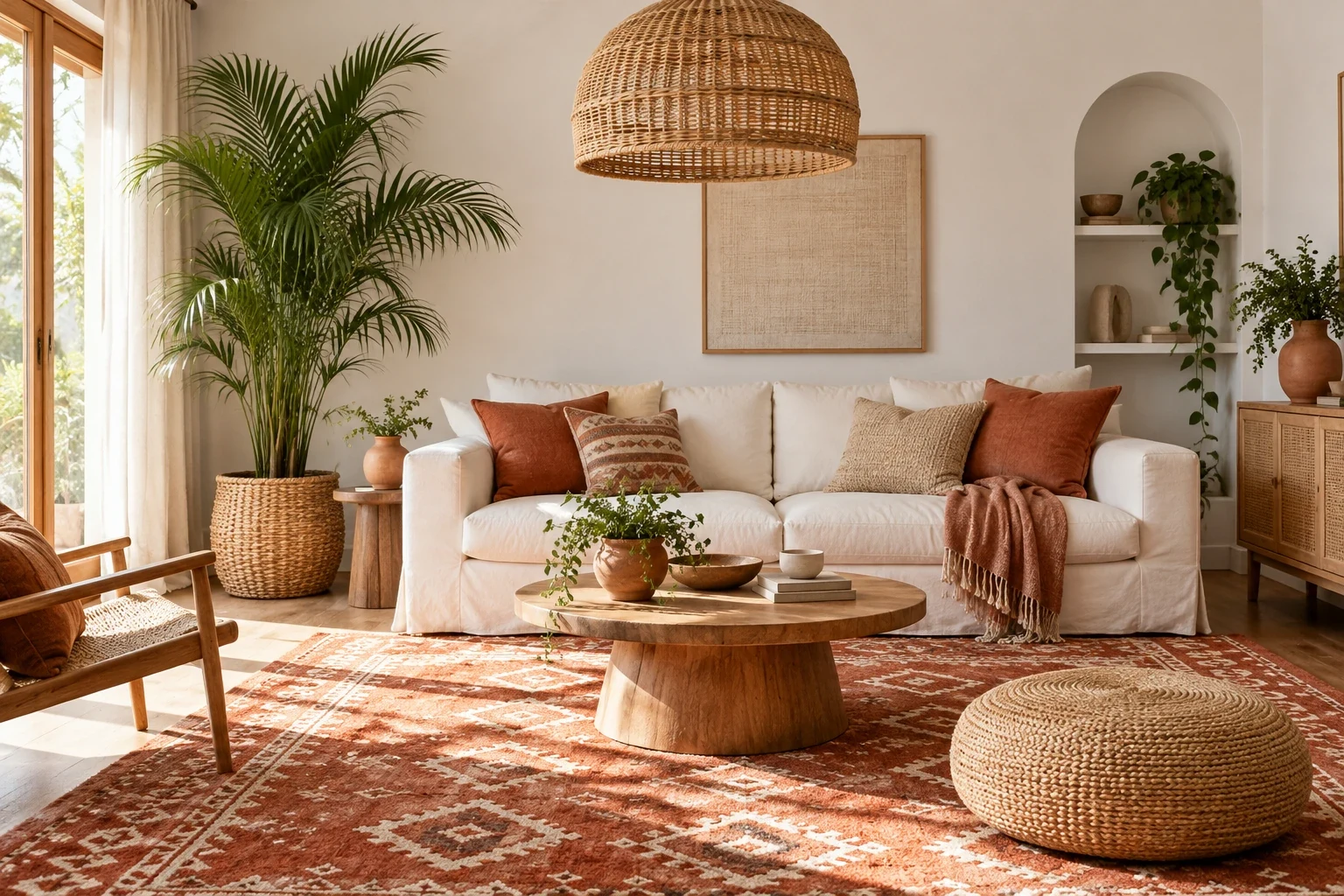
Living rooms filled entirely with rigid furniture and bare surfaces often feel stiff and uninviting. Introducing organic textures, relaxed seating, and layered foliage brings back a comfortable, lived-in warmth. Mixing earthy elements like woven jute, clay pottery, and soft fabrics relaxes the overall mood.
Bring in a Palm

Place a tall forest green potted palm in an empty corner of the room. Large plants fill vertical dead zones without requiring heavy furniture, adding organic shapes that soften straight walls. Look for a mature palm standing at least five feet tall to make a strong visual impact. Keep the plant near a window for adequate morning daylight, and set the nursery pot inside a simple ceramic or woven basket to catch water drips. This single addition costs around fifty dollars and breaks up large blocks of soft white paint.
Use a Rattan Shade

Install a large woven rattan pendant shade directly over the main seating zone. The open weave filters harsh bulb glare, casting soft, dappled shadows across surrounding surfaces during the evening. Pick a fixture measuring at least twenty inches in diameter to establish a clear focal point. Attach the shade to a standard cord kit or connect it to an existing ceiling box. Hang the bottom edge roughly seven feet above the floor to maintain open clearance throughout the living room.
Style a Cream Sofa

Ground your seating arrangement with a relaxed cream sofa in the center of the room. A neutral base allows you to swap out colorful pillows and throws over the years without buying new heavy furniture. Pick a slipcovered model made of durable cotton canvas or linen that you can remove and machine wash. Leave about three feet of walking clearance behind the back if it floats in the middle of the floor. This soft white foundation keeps the room feeling bright and open even on cloudy days.
Unroll a Motif Rug

Anchor the floor space with a terracotta area rug featuring geometric bohemian patterns. The warm clay tones hide daily dust and foot traffic much better than a solid light carpet, making it highly practical for busy households. Select an eight-by-ten-foot size to ensure the front legs of your main seating sit firmly on the fibers. Roll out a felt rug pad underneath to prevent slipping and add an extra half-inch of cushioning. The repeating geometric motifs introduce visual interest without cluttering the flat surfaces.
Toss a Floor Pouf

Set a round woven floor pouf directly on your area rug near the main seating. This low-profile piece serves as a casual footrest or an extra seat without blocking sightlines across the room. Look for poufs stuffed with dense cotton batting rather than cheap foam beads, ensuring they hold their shape under weight. A piece measuring roughly twenty inches across costs around forty dollars and moves easily when vacuuming. The woven exterior adds another layer of tactile material to the floor level.
Add Leather Armchairs

Incorporate leather seating by placing a warm tan armchair in a quiet reading corner. Natural leather develops a soft patina over time, bringing a rich, earthy texture that contrasts nicely with fabric sofas. Pair the chair with a solid terracotta linen pillow to tie it into the room’s broader color palette. Position the seat next to a large potted fiddle-leaf fig to frame the spot with greenery. Leave at least eighteen inches of space between the chair and the wall so the leather can breathe.
Bring in a Round Table

Center your layout around a round coffee table featuring a warm wood top. The curved edges soften the sharp angles of square rugs and rectangular sofas, making the walking paths flow better in tight areas. Style the wood-topped coffee table with a short stack of hardcover books and a small forest green plant. Choose a table that measures about eighteen inches high so it aligns with the seat cushions. This setup keeps daily items within arm’s reach while exposing the natural wood grain.
Suspend Trailing Vines

Hang a trailing pothos plant from the ceiling using a knotted macrame hanger. Drawing the eye upward emphasizes the height of the room and utilizes empty corners near bright windows. Drill a heavy-duty toggle bolt into the drywall ceiling to safely support the weight of the wet soil. Position the hanger so the bottom of the pot sits about five feet off the floor, keeping the vines clear of foot traffic. The cascading green leaves thrive in indirect morning light with minimal weekly watering.
Drape Fringed Throws

Drape a soft white fringed throw casually over the arm of a rattan chair. Keeping a blanket ready provides quick warmth during cool evenings while softening the rigid structure of natural furniture. Tuck a terracotta cushion behind the fabric to support the lower back and introduce a warm clay tone. Select lightweight cotton throws in the twenty to forty dollar range to allow frequent machine washing without static buildup. Let the fringed trim cascade toward the floor to create an uncluttered, relaxed look.
Install Sheer Curtains

Frame your French doors with light soft white sheer curtains hung from a simple metal rod. Sheer fabrics filter harsh direct sunlight into a soft, diffused glow while maintaining daytime privacy from the street. Mount the curtain rod about four inches below the ceiling line to draw attention upward. Buy panels that measure twice the width of the doors so they look full and gather nicely when pulled shut. Let the bottom hems barely graze the floor to keep them from collecting dust.
Build a Gallery Wall

Display a collection of abstract terracotta and soft white art in light wood frames on a blank hallway wall. Grouping similar tones creates a cohesive focal point without overwhelming the viewer with chaotic colors. Arrange the frames organically, leaving roughly two inches of negative space between each piece. Map out the layout on the floor first, then use paper templates and painter’s tape to transfer the design to the wall. Drive small finishing nails straight into the drywall to hold these lightweight frames securely.
Layer a Jute Rug

Lay down a natural jute rug directly on the wood floor as a textured base underneath a smaller terracotta patterned rug. Layering rugs adds thick cushioning underfoot and allows you to use a smaller, more expensive decorative rug without it looking lost in the room. Buy a coarse jute base that extends at least twelve inches past the edges of the top rug on all sides. Secure the bottom layer with double-sided carpet tape to prevent the edges from curling up and creating a tripping hazard.
Mount a Round Mirror

Position a large round mirror with a thin warm rattan frame on the wall above a wood console. Mirrors bounce natural light back into the room, making narrow or dark corners feel significantly brighter and wider. Hang the mirror so the center sits exactly at eye level, roughly sixty inches from the floor. Check the reflection from the main seating area to ensure it catches a nearby forest green plant rather than a blank ceiling. Use a heavy-duty picture hook rated for fifty pounds.
Store in Woven Baskets

Tuck two large woven seagrass baskets under a warm wood side table near the adjoining dining space. Baskets provide deep, hidden storage for extra soft white blankets, keeping the main seating area tidy while keeping warmth close by. Choose baskets measuring at least fourteen inches high to hold bulky items without them spilling over the top. Slide felt pads onto the bottom of each basket to protect your floors from scratches when pulling them out. The natural seagrass introduces another earthy texture to the room.
Stack Floor Cushions

Stack three square floor cushions in alternating terracotta and soft white against an open wall. Keeping cushions out in the open provides instant seating for casual reading without taking up the permanent footprint of a chair. Place a small rattan magazine rack right next to the stack to create a dedicated lounging zone beside the fireplace. Look for cushions covered in heavy-duty canvas that measures about four inches thick for proper support. This vertical stack utilizes empty wall space while adding a pop of color.
Showcase Clay Planters

Group a cluster of three terracotta planters in varying heights on a warm wood built-in shelf. Using unglazed clay pots allows the soil to dry out evenly, which keeps small forest green succulents healthy and prevents root rot. Arrange the tallest planter in the back and the two shorter ones slightly forward to create visual depth. Line the bottom of each pot with an inch of small gravel before adding the potting mix. This inexpensive arrangement brings life to flat shelving units.
Pin this list of ideas for your next weekend room refresh. Setting up a tall potted palm is the fastest way to start changing the mood.
