
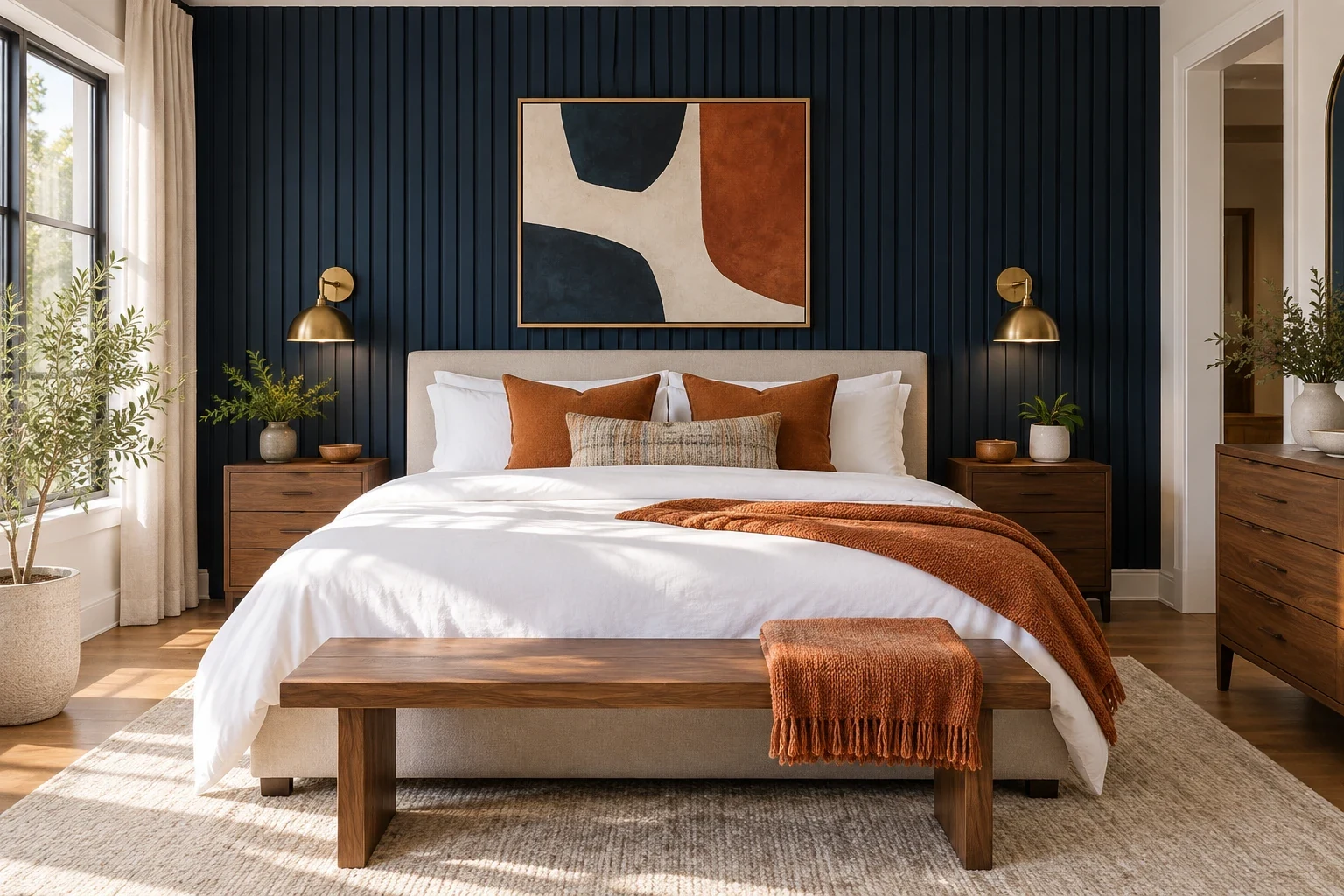
Deep paint colors absorb natural light, making a bedroom feel grounded and quiet. Adding physical texture over that dark base, like wood strips or brass metal, breaks up the flat surface so the room stays warm rather than heavy. These practical layers turn a basic painted wall into a finished architectural feature.
Mount Wall Lights

Install wall sconces flanking the bed to free up space on your nightstands. Brass fixtures stand out sharply against a dark navy background, bringing a warm metallic finish into the room. Hardwiring gives you a clean look without cords, but plug-in sconces cost around $60 to $120 and require just a drill and a wall anchor. Mount the center of the light about 30 to 36 inches above the top of the mattress so you can reach the switch from a lying position.
Add Vertical Slats

Attach thin wood strips over your drywall to build a custom slatted backdrop. Vertical lines draw the eye upward, giving a standard eight-foot room a sense of height. You can buy pre-made acoustic wood panels for roughly $150 per sheet, or cut one-by-two pine boards yourself to save money. Space the boards about half an inch apart, using a scrap piece of wood as a spacer during installation. Paint the wall and the slats the same deep navy blue to unify the whole structure.
Layer White Sheets

Make your bed with stark white cotton or linen bedding to create a sharp contrast against a dark accent wall. Light fabrics reflect morning sunlight, keeping a moody room from feeling too dim during the day. A basic percale sheet set costs around $80 and holds its crisp texture through weekly washes. Fold the top sheet down over the duvet cover by about six inches to show off the clean white edge. This clean break in color highlights the deep tones of the wall behind it.
Hang Abstract Art

Position a large framed print directly over the headboard to break up a wide expanse of dark paint. Abstract shapes in lighter tones pull focus to the center of the room and soften the rigid lines of the wood slats. Buy a digital art file online for under $15 and have it printed at a local shop to fit an 18-by-24-inch frame. Use a picture hanging hook rated for at least 30 pounds, driving the nail into a stud so the frame stays secure above your pillows.
Place a Wood Bench

Set a sturdy walnut bench at the foot of your mattress to anchor the center of the room. The warm brown tones of the wood tie into the overall palette, balancing the cool navy tones on the main wall. A bench provides a practical spot to tie your shoes or lay out clothes for the next day. Look for a piece measuring around 48 inches long, ensuring it leaves at least two feet of walking clearance on either side of a standard queen-size bed.
Paint a Dark Ceiling

Extend your accent color upward by painting the ceiling the same deep navy blue. With the ceiling treated as a feature, the room wraps around you, making a large, boxy space feel more contained and deliberate. Leave the crown molding and the side walls crisp white to frame the dark surfaces. You will need about two gallons of flat interior paint, costing roughly $90, to cover a standard 12-by-15-foot bedroom ceiling. Roll the paint in overlapping W-patterns to avoid visible lines when the light hits it.
Hang Sheer Drapes

Soften incoming daylight by running sheer white curtain panels across your windows. A dark accent wall absorbs light, so filtering the sun through lightweight fabric prevents harsh shadows from forming across the room. Hang a brass curtain rod about four to six inches above the window trim to draw the eye up. Two sheer panels usually cost under $40 and diffuse the morning glare while maintaining privacy. Let the fabric hover just half an inch above the floor to keep the hems clean and dust-free.
Lean an Arched Glass

Stand a tall arched floor mirror in a dark corner to bounce natural light back toward the bed. The curved brass top softens the straight lines of the room, while the reflection makes the space feel twice as deep. A 65-inch tall mirror typically costs between $150 and $300, depending on the frame material. Angle the base about five inches away from the baseboard so the glass tilts slightly upward. Always secure the top to the wall with an anti-tip strap to prevent accidents on carpeted floors.
Toss Rust Cushions

Bring warmth to a cool navy backdrop by placing rust orange velvet cushions on the bed. The rich, earthy tone complements dark blue perfectly, creating a balanced color palette without requiring new paint. Velvet covers cost around $20 each and add a soft, tactile layer against crisp cotton sheets. Buy inserts that are two inches larger than the covers to ensure the pillows look full and structured. Chop the top edge of each cushion lightly with your hand to give them a relaxed, lived-in shape.
Lay a Patterned Rug

Ground a reading nook or seating area by rolling out a patterned area rug over your hardwood floors. Mixing rust and cream geometric shapes ties the room’s accent colors together while protecting the wood from furniture scratches. An 8-by-10-foot synthetic rug runs about $200 and cleans up fast with regular vacuuming. Slip a quarter-inch felt pad underneath to keep the corners from curling up and tripping you. Tuck the front two legs of your armchair over the edge to anchor the rug in place.
Pot an Olive Tree

Fill an empty corner beside your dresser with a tall indoor olive tree. The muted green leaves contrast gently with deep blue walls, bringing a touch of nature indoors. Place the plastic nursery container inside a larger rust terracotta pot, filling the gaps with crumpled newspaper to keep it stable. A live olive tree needs at least six hours of direct sunlight, but a high-quality artificial version costs around $120 and requires zero maintenance. Top the planter with dried Spanish moss to hide the base completely.
Use Board and Batten

Frame out a geometric board and batten pattern on the primary bedroom wall to create structural depth. Grid patterns cast subtle shadows that shift throughout the day, making a dark charcoal gray paint finish feel warm and dimensional rather than heavy. Construct this trim layout using 1×3 MDF boards, which run about $4 per eight-foot length. Plan the grid layout on paper first, aiming for symmetrical square boxes roughly 20 inches wide across the wall. Fasten the wood strips using a brad nailer, caulk every seam smooth, and finish with two coats of deep paint.
Bring in Warm Walnut

Pair your dark painted walls with a warm walnut dresser to balance the cool tones of the room. The natural wood grain stands out against a navy background, giving the space a mature, finished look. A solid wood dresser with six drawers provides ample storage and typically costs between $600 and $1,200. Swap out the factory hardware for brushed brass pulls to match the lighting fixtures nearby. Leave at least 36 inches of clearance in front of the unit so you can open the drawers comfortably.
Measure the distance from your mattress to the ceiling before buying wood slats. You need the exact vertical drop to calculate how many eight-foot trim boards will cover the wall.
